h2.faq-blog-title{display:none!important}.faqs.w-dyn-list{display:none!important}nav[aria-label="Table of contents"] ol{padding-left:2.5rem!important}.blog-single-top-wrap,.blog-single-heading-wrap,.writer-wrap,.blog-large-image-wrap,.blog-single-details-wrap,.blog-single-details-left{opacity:1!important;transform:none!important;filter:none!important}h2.faq-blog-title{display:none!important}.faqs.w-dyn-list{display:none!important}nav[aria-label="Table of contents"] ol{padding-left:2.5rem!important}
Most companies spend tens of thousands of dollars on a trade show booth and walk away with a stack of business cards they never follow up on. Here is what trade shows actually are, what they are built to do, and how the best exhibitors use them to drive real pipeline.
What Is a Trade Show?

A trade show is an organized event where companies within a specific industry gather to showcase products, demonstrate services, meet prospective buyers, and build business relationships. These events typically run 2 to 5 days and take place at large convention centers like McCormick Place in Chicago, Messe Frankfurt in Germany, or Olympia London.
You will sometimes hear the terms "trade show" and "trade fair" used interchangeably. There is a subtle difference. A trade fair traditionally refers to events with a broader scope, often international, where buying and selling happen on the floor. A trade show tends to focus more on product demonstrations, brand awareness, and lead generation rather than immediate transactions. In practice, the line between the two has blurred. Most people in B2B use "trade show" as the default term.
The US B2B trade show market hit $10.2 billion in 2022 after collapsing to $3.9 billion in 2020. That recovery tells you something: companies came back because face-to-face selling still closes deals that digital channels cannot.
Key Elements of a Trade Show

A trade show is not a single thing. It is a layered environment with several moving parts. Understanding each one helps you decide how to allocate your budget and where to focus your team's time.
Exhibitors
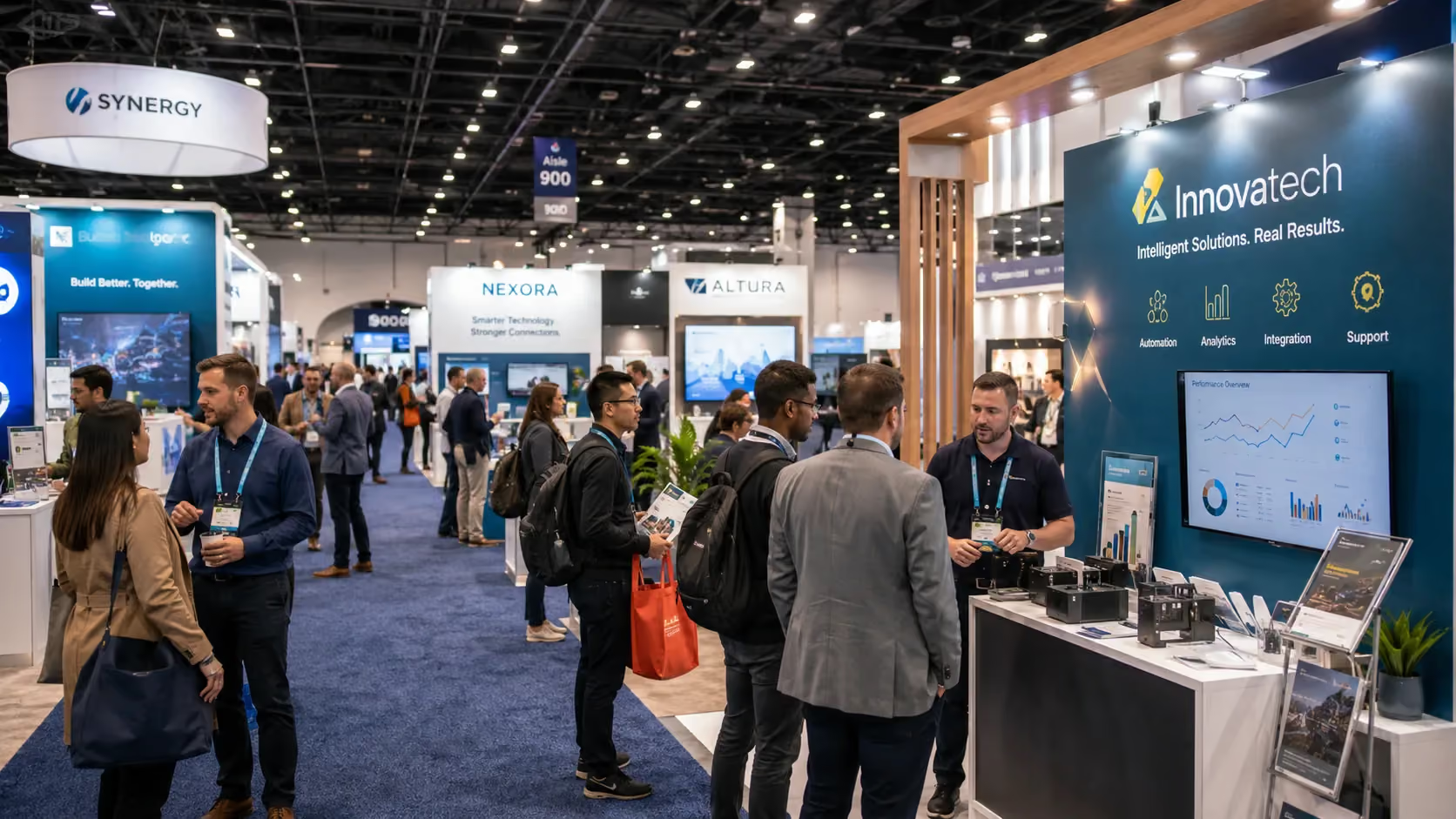
Exhibitors are the companies that pay for booth space to present their products or services. They range from Fortune 500 enterprises with 10,000-square-foot island booths to funded startups with a 10x10 shell scheme. Exhibitors drive the revenue model for trade shows and are the primary reason attendees show up.
Trade Show Booths
The booth is the physical (or virtual) space an exhibitor controls. Inline booths line the perimeter or fill rows on the floor. Island booths sit in the open with four accessible sides. Peninsula booths back against one exhibit and open on three sides. Booth design, signage, and traffic flow are not decoration — they are sales infrastructure.
Attendees
Attendees include potential buyers, existing customers, distributors, press, and industry analysts. At B2B trade shows, most attendees are pre-qualified by the event's industry focus. They pay a registration fee or attend by invitation. Their intent to evaluate and buy is higher than almost any other channel — they showed up to the venue on purpose.
Seminars, Workshops, and Keynote Speakers
Most trade shows run a conference program alongside the exhibition floor. Keynotes bring in industry figures and create appointment viewing. Seminars and workshops attract attendees who might otherwise skip the floor. If your company earns a speaking slot, it is one of the highest-leverage activities at the event — you speak to hundreds before they ever visit your booth.
Networking Opportunities
Structured networking events — roundtables, hosted buyer programs, evening receptions — run alongside the main floor schedule. These are where relationships actually form. The booth is where you qualify; the networking event is where you build trust.
Show Services and Event Logistics
Everything behind the booths — freight handling, electrical, rigging, cleaning, internet, catering, and audiovisual — is managed by the show's official service contractor. These services are priced at a premium. Understanding the exhibitor service kit before you sign a contract can save thousands.
Types of Trade Shows

Not all trade shows serve the same purpose or attract the same audience. The type of event you choose (or exhibit at) determines who walks your floor and what kind of conversations you have.
TypeAudiencePurposeExampleB2B Trade ShowIndustry professionalsLead generation, partnerships, deal-makingCES, Dreamforce, CONEXPOConsumer Trade ShowGeneral publicDirect sales, brand awarenessAuto shows, Comic-ConVirtual/HybridRemote and in-personBroader reach, lower costIMEX America hybrid formatsRegional/NicheSpecific geography or sub-industryTargeted buyer accessRegional manufacturing expos
B2B Trade Shows
B2B trade shows are closed or semi-closed events for professionals in a specific industry. Entry typically requires proof of business affiliation or a paid registration. These events generate the most qualified leads because everyone on the floor has a buying, selling, or partnering reason to be there.
Consumer Trade Shows
Consumer trade shows open to the general public. They prioritize volume over qualification. Companies use them for direct sales, product launches, and brand exposure to end users. Auto shows, food expos, and electronics fairs fall into this category.
Virtual and Hybrid Trade Shows
A virtual trade show replicates the exhibition floor through a digital platform. Attendees browse booths, watch demos, and connect through video or chat. Hybrid events run an in-person event and a digital version simultaneously. Both formats expanded dramatically after 2020. They lower cost and remove geographic barriers but cannot replicate the density of face-to-face interaction that drives large B2B deals.
Benefits of Attending a Trade Show

Trade shows create value differently depending on which side of the booth you are on.
Benefits for Exhibitors
Lead generation at scale. A well-run booth at a major trade show can generate more qualified conversations in three days than a field sales team produces in a quarter. The leads are pre-qualified by the event's industry focus before they reach you.
Competitive intelligence. You can walk every competitor's booth, see their messaging, evaluate their products, and speak to shared prospects — all in one afternoon. No other channel gives you this.
Product launches and brand visibility. Trade shows create natural announcement moments. Launches generate press coverage, social activity, and buyer attention that would cost multiples more to manufacture through paid media.
Face-to-face deal acceleration. Complex B2B sales cycles that stall over email often close faster after an in-person meeting at a show. The trust built in a 20-minute product demo is difficult to replicate digitally.
Benefits for Attendees
Product evaluation. Attendees can compare competing products side by side, ask technical questions, and touch or demo hardware in ways that no product page or video can match.
Industry education. Conference sessions, keynotes, and workshops compress months of industry reading into a few days. New trends, regulatory changes, and emerging technologies surface in real time.
Relationship building. Trade shows are one of the few remaining venues where buyers, sellers, analysts, and press congregate in the same room. Relationships formed at events tend to carry more weight than connections made online.
How to Plan and Prepare for a Trade Show

Showing up is not a strategy. The companies that generate ROI from trade shows treat them as campaigns with a defined start date, end date, and conversion goal.
6 Months Before the Event
Select your show based on ICP overlap, past ROI data, and exhibitor testimonials — not brand prestige. Secure your booth space early; prime locations go to returning exhibitors first. Set a budget with line items for booth space, design, freight, travel, staffing, and lead follow-up tools.
If this is your first event, work through this trade show checklist for first-time exhibitors before you book anything.
3 Months Before the Event
Finalize booth design and begin fabrication. Brief your booth staff on goals, qualifying questions, and objection handling. Begin pre-show outreach to existing prospects and customers — book meetings before the floor opens. Teams that plan multiple events a year are now using AI tools for event planning to cut research and scheduling time significantly.
Day of the Event
Arrive early enough to test all booth technology before the floor opens. Assign clear roles: who qualifies, who demos, who handles logistics. Use a consistent lead capture process so no conversation falls through the gap between badge scan and CRM entry.
After the Event
Follow up within 48 hours. That is the window where leads are still warm and your conversations are still fresh in their memory. Segment your leads by intent level and route them to the correct sales motion.
How to Capture and Follow Up on Leads
The booth performance metrics that matter are not impressions or badge scans. They are qualified conversations, meeting rates, and pipeline generated within 30 days of the show.
Most exhibitors fail at lead capture for the same reason: they use a fragmented system. Badge scanners go to one spreadsheet. Business cards go into a pocket. Sales notes live in a rep's head. By the time the plane lands, context is lost and follow-up sequences are generic.
The fix is a single lead capture system that logs every conversation, tags intent level, and feeds directly into your CRM with the context you need to send a relevant follow-up.
Lensmor is built for exactly this workflow. Scan a badge, log a note, assign a follow-up task, and sync to your CRM — all from the floor. No spreadsheets, no lost cards, no cold follow-ups. The tactics that actually fill your CRM during an event are covered in detail here: how to collect leads at a trade show.
Ready to fix your lead capture before your next event? Try Lensmor free →
The Biggest Trade Shows in the World
Scale gives you a sense of what trade shows can look like at their largest. These events are destination marketing programs in their own right.
CES (Consumer Electronics Show) — Las Vegas. 180,000+ attendees. The global stage for technology product launches across consumer electronics, automotive, and health tech.
IMEX America — Las Vegas. The leading trade show for the meetings and events industry. Buyers from corporations, associations, and agencies meet with venues, destinations, and suppliers.
Dreamforce — San Francisco. Salesforce's annual conference-trade show hybrid. 40,000+ in-person attendees plus hundreds of thousands of virtual participants.
CONEXPO-CON/AGG — Las Vegas. The largest construction trade show in North America. 130,000+ attendees, 2,400+ exhibitors.
Hannover Messe — Germany. The world's largest industrial technology trade fair. 4,000+ exhibitors across manufacturing, energy, and logistics.
Natural Products Expo West — Anaheim. The leading show for the natural products and healthy living industry. 3,600+ exhibitors, 65,000+ attendees.
How Much Does a Trade Show Cost?
Cost is the number most first-time exhibitors underestimate. The booth space fee is only the beginning.
Cost CategoryEstimated RangeBooth space (10x10)$3,000 – $10,000Booth space (20x20 island)$15,000 – $40,000Booth design and fabrication$5,000 – $50,000+Freight and drayage$1,500 – $8,000Travel and accommodation (per staff)$1,500 – $3,000Marketing materials and giveaways$1,000 – $10,000Lead capture technology$500 – $3,000Total (small exhibitor, regional show)$10,000 – $25,000Total (mid-size exhibitor, major show)$40,000 – $120,000+
The variables that drive cost up fastest: drayage (freight handling fees charged by the show's official contractor), custom booth fabrication, and last-minute service orders. Budget a 15–20% contingency on top of your line-item total.
How to Measure Trade Show ROI
Most exhibitors measure success by badge scans. That is the wrong metric. A badge scan records that a person walked past your booth. It says nothing about intent, fit, or likelihood to buy.
The metrics that reflect actual return:
Compare these numbers against your other acquisition channels. If cost per closed deal from trade shows is lower than paid search or outbound, you are under-investing in events. If it is higher, re-evaluate which shows you attend and how you staff them.
Non-revenue signals worth tracking: competitive intelligence gathered, press mentions, partnership conversations initiated, and net-new CRM contacts added.
Conclusion
A trade show is one of the few channels that compresses an entire sales cycle into a few days. The industry is in the room. The buyers are pre-qualified by the fact that they paid to attend. The competitive landscape is visible in real time.
The difference between companies that generate ROI and companies that come home with a stack of cold leads is a system. Pre-show planning, a structured booth experience, and a lead capture process that feeds directly into sales follow-up — that is the complete picture.
If you are building that system for your next event, Lensmor handles the lead capture layer. Scan, qualify, note, sync. No friction between the conversation and the CRM.
Frequently Asked Questions
What is the purpose of a trade show?
A trade show is a focused B2B event where companies exhibit products, generate qualified leads, and study competitors — all within one venue over two to four days. It compresses months of outbound sales activity into a concentrated window.
What is the difference between a trade show and a trade fair?
A trade fair typically refers to a broader, often international event where transactions happen on the floor — think Hannover Messe or Basel World. A trade show focuses more on demonstrations, lead generation, and relationship-building rather than immediate buying and selling. In practice, the terms are used interchangeably in North American B2B. The distinction matters more in European and manufacturing contexts.
What are the three types of trade shows?
The three main types are B2B trade shows (for industry professionals), consumer trade shows (open to the general public), and virtual or hybrid trade shows (online or blended format).
What is the biggest trade show in the US?
CES (Consumer Electronics Show) in Las Vegas is consistently the largest trade show in the US by attendance, drawing over 180,000 attendees and 4,000+ exhibitors annually. CONEXPO-CON/AGG (construction) and the International Manufacturing Technology Show (IMTS) are among the largest by exhibit floor size.
What is an example of a well-known trade show?
CES, Dreamforce, IMEX America, Natural Products Expo West, and CONEXPO-CON/AGG are among the most recognized trade shows in the US. Internationally, Hannover Messe (industrial technology), Basel World (watches and jewelry), and the Geneva Motor Show are well-known examples across different industries.
How long does a trade show typically last?
Most trade shows run 2 to 5 days. Smaller regional shows and niche industry events often run 1 to 2 days. Large international events like CES or Hannover Messe run 4 to 5 days. The exhibition floor schedule is typically 8 to 9 hours per day, with networking events and conference sessions extending the schedule into evenings.
Who can attend a trade show?
Most B2B trade shows require attendees to demonstrate industry affiliation — a business email, company registration, or a paid professional membership. Consumer trade shows are open to the general public with basic ticket purchase. Press, analysts, and investors often receive complimentary or press-rate access. Some events offer hosted buyer programs where the organizer covers travel costs for qualified purchasing decision-makers.
How much does it cost to exhibit at a trade show?
Exhibiting at a regional show starts around $10,000 to $25,000 total when you factor in booth space, basic design, freight, and two staff members. A mid-size presence at a major national show runs $40,000 to $120,000+. The biggest cost variables are booth fabrication, drayage (freight handling), and last-minute service orders. Budget a 15–20% contingency above your line-item total.
What actually drives visitors to your trade show booth?
Booth location on the floor drives foot traffic more than any other variable. Placement near entrances, main aisles, food stations, or keynote rooms increases exposure. Beyond location: open booth layout (no tables blocking entry), staff with visible energy and no phones, a clear problem statement visible from 20 feet, and interactive demos or crowd-drawing demonstrations all outperform static displays. Pre-scheduled meetings are the most reliable driver — book them before the floor opens.
Can small businesses benefit from trade shows?
Yes. Small businesses benefit most from niche, regional shows where their specific ICP concentrates. A 10x10 booth at a regional industry show can total under $10,000 and produce enough qualified leads to fill a quarter's pipeline. The key advantage for small companies: booth staff who know the product deeply and can have genuine technical conversations that larger companies' booth staff often cannot. Pre-show outreach to book meetings in advance removes dependence on walk-in traffic.
What is a virtual trade show?
A virtual trade show is an online event where exhibitors set up digital booths with product information, video demos, and live or asynchronous chat. Attendees browse booths, attend webinars, and connect through messaging or video calls. Virtual events expanded after 2020 and offer lower costs and broader geographic reach. They consistently produce lower engagement and deal velocity than in-person events in B2B contexts. Most companies treat virtual as a supplement, not a replacement.
How do you measure trade show ROI?
Trade show ROI is calculated by comparing total event cost against the pipeline or revenue generated from event leads. The core formula: (revenue from event leads minus total event cost) divided by total event cost, multiplied by 100.